Discover.
Entertain. Live. Asorock
U.S.-Iran Strikes and Israel-Lebanon Fighting Put Middle East Ceasefires Under Severe Strain
A week of direct U.S.-Iran exchanges, Iranian fire toward Gulf states, renewed violence in Lebanon, Gaza aid warnings, and nuclear-monitoring disputes has turned several fragile ceasefires into one linked regional crisis.
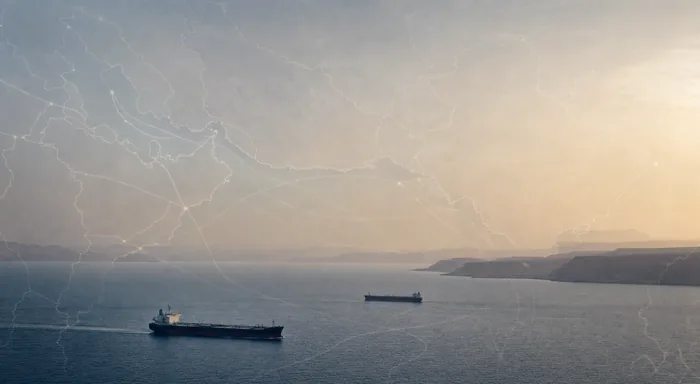
The most important Middle East conflict development this week is not a single battlefield event, but the way several flashpoints are now feeding into one another. U.S. forces have carried out renewed strikes in Iran, while U.S. officials say Iranian missiles and drones were launched toward Gulf allies and the Strait of Hormuz. At the same time, Israeli strikes in Lebanon have tested a newly announced ceasefire effort, Iran has linked restraint toward Israel to events on the Lebanon front, and the UN has warned that ceasefires involving Iran, Lebanon, and Gaza are under severe pressure. The result is a wider escalation risk that stretches from southern Lebanon and Gaza to the Gulf, global shipping lanes, and nuclear diplomacy.
Key Takeaways
- U.S. forces said they struck multiple targets in Iran on June 10, following earlier exchanges that included Iranian missiles and drones launched toward Gulf allies and the Strait of Hormuz, according to U.S. and AP reporting.
- The Israel-Lebanon ceasefire track is already under strain after reported Israeli strikes in southern Lebanon killed nine people, including three Lebanese army members, according to AP citing Lebanese sources.
- Iran and Israel reportedly paused attacks after a U.S. appeal, but Iran warned it could resume strikes if Israel continued hitting Hezbollah in Lebanon, making Lebanon a trigger point for wider escalation.
- The UN Secretary-General has urged parties to abide by ceasefires in Lebanon, Iran, and Gaza, protect civilians, respect navigational freedoms, and reopen Gaza crossings for humanitarian assistance.
- The IAEA Board of Governors has demanded urgent Iranian cooperation, information on enriched uranium stockpiles, and inspector access, placing nuclear verification back at the center of the crisis.
- Instability around the Strait of Hormuz is already being framed by UN agencies as a global aid and food-security risk because higher fuel and transport costs can affect humanitarian operations far beyond the Middle East.
Several ceasefires are now tied to one another
The central risk this week is that restraint on one front may depend on events on another. U.S.-Iran exchanges around Iran, Gulf states, and the Strait of Hormuz are unfolding alongside Israel-Lebanon fighting, Gaza aid restrictions, and unresolved nuclear-monitoring disputes. Lebanon has become especially important because Iran has publicly linked its own restraint toward Israel to whether Israeli strikes against Hezbollah continue. That means a strike in southern Lebanon, a missile alert in the Gulf, a breakdown in nuclear access, or renewed Gaza aid restrictions could each deepen a regional crisis that already has military, humanitarian, diplomatic, and economic dimensions.
Direct U.S.-Iran exchanges widen the escalation map
The week’s sharpest escalation came from direct military exchanges involving the United States and Iran, with Gulf states and the Strait of Hormuz drawn into the security picture.
U.S. Central Command said U.S. forces were striking multiple targets in Iran on June 10 in response to what it called Iran’s continued aggression. AP reported the action as a second day of renewed U.S. strikes after an earlier U.S.-Iran exchange. Earlier, on June 5, U.S. forces said they shot down Iranian ballistic missiles and drones launched toward Kuwait, Bahrain, and the Strait of Hormuz, then struck Iranian coastal surveillance radar sites. AP also reported that Bahrain sounded missile alert sirens early on June 11 after Iran threatened retaliation over new U.S. airstrikes, and that Bahrain, Kuwait, and Jordan had come under Iranian fire in the same escalation cycle.
This is a broader danger than a contained exchange between Washington and Tehran. Gulf states that host U.S. forces can become targets or interception zones even when they are not seeking direct war. The Strait of Hormuz adds another layer: military activity near one of the world’s most important maritime corridors raises risks for shipping, energy markets, and regional deterrence calculations.
The Gulf dimension can export the conflict’s effects into global energy, freight, insurance, fertilizer, and food systems. It also increases pressure on U.S. partners in the region, whose airspace, bases, and ports may become part of the operational environment. For civilians in Gulf states, missile alerts and interception activity create direct public-safety anxiety even when attacks are intercepted or do not cause publicly confirmed casualties.
What To Watch
- Whether U.S. and Iranian statements describe the latest strikes as limited responses or as the start of a longer campaign.
- Any confirmed missile, drone, or maritime incident involving Bahrain, Kuwait, Jordan, or other Gulf states hosting U.S. forces.
- Shipping advisories, insurance-rate changes, or military warnings around the Strait of Hormuz.
- Whether Iran threatens or carries out further retaliation against U.S.-linked targets in the region.
Lebanon is becoming the trigger point for wider restraint
A ceasefire effort announced after Washington talks is already being tested by Israeli strikes, Lebanese casualties, Hezbollah’s position, and Iran’s warnings.
After high-level trilateral talks between Israeli and Lebanese representatives in Washington on June 2-3, the UN welcomed a ceasefire announcement and called for implementation of Security Council resolution 1701 and Lebanese state control over weapons. Days later, AP reported that Israeli airstrikes in southern Lebanon killed nine people, including three Lebanese army members, citing the Lebanese army and state media. UN Geneva also reported fresh strikes in Tyre and said a UN-led assessment put building damage across Beirut and Mount Lebanon since the latest escalation at more than $365 million.
Lebanon is not only a local front. Iran has warned it could resume strikes if Israel continues hitting Hezbollah in Lebanon, according to Reuters-republished reporting. That makes the Lebanon ceasefire track a pressure valve for the broader Iran-Israel confrontation. It also places Lebanon’s state institutions in a difficult position: the diplomatic track asks the Lebanese state to extend authority, while continuing violence weakens public confidence and raises the cost for the Lebanese Armed Forces and government.
Repeated strikes, displacement, housing damage, and health-system strain deepen Lebanon’s internal crisis. Civilian communities in the south and in areas affected by previous escalation face uncertainty over whether it is safe to return or rebuild. The deaths of Lebanese military personnel, if confirmed in full, could also complicate the state’s ability to present itself as a stabilizing actor between Israel, Hezbollah, and international mediators.
What To Watch
- Whether Israeli strikes in Lebanon continue despite ceasefire language.
- Whether Hezbollah claims attacks, signals restraint, or rejects terms linked to resolution 1701.
- Lebanese government and army statements after further casualties or damage.
- UN reporting on displacement, housing damage, health-system strain, and reconstruction funding needs.
- Any Iranian statement explicitly linking Lebanon to renewed attacks on Israel or U.S.-linked targets.
The UN is trying to keep Gaza, Lebanon, Iran, and maritime security in one diplomatic frame
The UN Secretary-General’s warning shows that the crisis is being treated as an interconnected regional emergency rather than separate ceasefire files.
On June 9, the UN Secretary-General said he was alarmed by renewed escalation in the Middle East and urged parties to abide by ceasefires in Lebanon, Iran, and Gaza. The UN also called for Gaza crossings to be reopened to allow rapid, safe, unhindered humanitarian assistance at scale, while stressing civilian protection and navigational freedoms.
The UN’s framing matters because it identifies the danger of linked failures. A breakdown in Gaza aid access can worsen civilian harm and diplomatic pressure. A strike in Lebanon can weaken Iran-Israel restraint. Threats near the Strait of Hormuz can pull global markets and aid operations into the consequences of regional military decisions. The challenge is that the UN can warn, coordinate relief, and support diplomacy, but it has limited ability to enforce compliance by the main armed actors.
For civilians, the result is a layered protection crisis. Lebanon faces strikes, displacement, housing instability, and infrastructure damage. Gaza faces renewed concern over closed crossings and aid restrictions. Gulf civilians face missile alerts and the risk of escalation around bases and ports. Civilians in Iran and Israel face risks from direct strikes and missile fire. These impacts are not equal across locations, but they are increasingly connected by the same escalation cycle.
What To Watch
- Whether Gaza crossings reopen for sustained humanitarian assistance or remain restricted.
- UN Security Council, Secretary-General, or humanitarian agency updates that connect the ceasefire tracks.
- New civilian casualty or displacement reporting from Lebanon, Gaza, Israel, Iran, or Gulf states.
- Whether parties publicly accept, reject, or redefine ceasefire obligations.
The nuclear file is re-entering the crisis at a dangerous moment
The IAEA’s demand for Iranian cooperation is unfolding alongside military escalation, making diplomacy harder and verification more urgent.
On June 10, the IAEA Board of Governors demanded urgent Iranian cooperation, information on enriched uranium stockpiles, and access for inspectors. AP reported that the resolution passed 21-3, with 10 abstentions and one non-vote. The nuclear watchdog’s move came as U.S.-Iran military exchanges intensified and as broader talks faced new pressure.
Nuclear verification disputes become more dangerous when military escalation is already underway. If inspectors lack access or information that the IAEA considers essential, governments may become more suspicious of Iranian capabilities and intentions. At the same time, Tehran may frame pressure from the IAEA or Western governments as coercive during wartime, making cooperation politically harder.
A worsening nuclear-monitoring dispute can narrow the space for diplomacy and make military signaling more intense. It can also increase pressure on states that still want a negotiated outcome, because any future agreement would need credible verification. Public discussion should remain precise: the current issue is the IAEA’s demand for cooperation, information, and access, not independently verified proof of weaponization.
What To Watch
- Whether Iran grants, delays, or refuses the requested IAEA access and information.
- Iranian official statements responding to the IAEA resolution.
- Any new U.S., European, Russian, Chinese, or regional diplomatic initiative on the nuclear file.
- Whether military strikes damage nuclear-related facilities or further restrict inspector access.
Hormuz instability could turn a regional conflict into a global aid and cost crisis
The Strait of Hormuz is not only a military chokepoint; UN reporting links instability there to fuel, transport, food-security, and humanitarian risks worldwide.
UN Geneva reported that instability around the Strait of Hormuz is reverberating through global supply chains, raising transport and fuel costs, and straining aid operations. WFP has warned that if oil prices stay above $100 a barrel through July, up to 45 million additional people could be pushed into hunger.
The humanitarian consequences of a Hormuz crisis would not stop at the Gulf. Higher fuel prices raise the cost of moving food, medicine, and aid workers. Higher transport costs can reduce the reach of relief operations already facing funding shortfalls. For vulnerable households far from the Middle East, the link may appear as higher food prices, reduced aid deliveries, or pressure on national budgets.
Energy markets, shipping routes, aid procurement, fertilizer costs, and food prices are all exposed to sustained instability near Hormuz. The WFP warning is conditional, not a confirmed outcome: it depends on how long prices remain high, how shipping adapts, and how governments and donors respond. Still, it shows why maritime security has become part of the civilian-impact story.
What To Watch
- Oil-price movements and whether prices remain above the threshold highlighted by WFP.
- Shipping diversions, port delays, insurance changes, or maritime-security advisories.
- Humanitarian agency warnings about rising operating costs or reduced aid deliveries.
- Any attack, interception, seizure, or military deployment that changes risk calculations in or near the Strait of Hormuz.
Key Events
-
2026-06-03
Israel-Lebanon ceasefire effort follows Washington talks
Israeli and Lebanese representatives held high-level trilateral talks in Washington on June 2-3. The UN then welcomed a ceasefire announcement and urged support for Lebanese state authority and implementation of Security Council resolution 1701.
-
2026-06-05
U.S. intercepts Iranian missiles and drones near Gulf allies and Hormuz
U.S. forces said they intercepted Iranian missiles and drones launched toward Kuwait, Bahrain, and the Strait of Hormuz, then struck Iranian coastal radar sites. The episode showed that the Gulf maritime front remained active despite ceasefire diplomacy elsewhere.
-
2026-06-06
Israeli strikes in southern Lebanon reportedly kill Lebanese military personnel
AP reported that Israeli airstrikes killed nine people, including three Lebanese army members, citing Lebanese sources. The reported deaths came days after a ceasefire announcement and undercut confidence in the Lebanon track.
-
2026-06-08
Israel and Iran reportedly halt attacks after U.S. appeal
Reuters-republished reporting said Iran and Israel paused attacks, but Iran warned it could resume strikes if Israel continued hitting Hezbollah in Lebanon. That made the Lebanon front central to the broader Iran-Israel pause.
-
2026-06-09
UN Secretary-General warns against renewed Middle East escalation
The UN called for parties to stop attacks, abide by ceasefires in Lebanon, Iran, and Gaza, respect navigational freedoms, protect civilians, and reopen Gaza crossings for aid.
-
2026-06-09
UN reports worsening Lebanon humanitarian and reconstruction burden
UN Geneva reported new strikes in Tyre, worsening insecurity and housing instability, and a UN-led assessment of more than $365 million in building damage in Beirut and Mount Lebanon since the latest escalation.
-
2026-06-10
IAEA Board demands Iranian nuclear cooperation and access
The nuclear watchdog’s board demanded information and inspector access from Iran as the military crisis intensified, raising the stakes for any future diplomatic settlement.
-
2026-06-10
U.S. launches another round of strikes in Iran
AP reported that U.S. forces struck multiple targets in Iran in the latest escalation after Iranian fire, U.S. retaliation, and pressure on negotiations.
Watchlist
Further U.S.-Iran military exchanges
Direct strikes and retaliation could move the crisis from contained signaling to a sustained confrontation involving Iran, U.S. forces, and Gulf partners.
Signals To Watch
- New U.S. Central Command strike or interception statements.
- Iranian claims of retaliation against U.S.-linked targets.
- Confirmed damage, casualties, or base alerts in Gulf states.
- Language from either side suggesting expanded target lists.
The durability of the Israel-Lebanon ceasefire track
Lebanon is now one of the most important trigger points for wider Iran-Israel restraint and for Lebanese state stability.
Signals To Watch
- Israeli strikes in southern Lebanon, Tyre, Beirut, or Mount Lebanon.
- Hezbollah attack claims or public restraint signals.
- Lebanese army casualties or deployments in the south.
- UN updates on resolution 1701 and Lebanese state authority.
Gaza humanitarian access
The UN has placed Gaza aid access inside the wider ceasefire crisis, and continued restrictions can intensify civilian harm and diplomatic pressure.
Signals To Watch
- Whether crossings reopen for sustained aid flows.
- UN statements on safe, rapid, unhindered humanitarian access.
- Reports of aid delays, shortages, or protection risks.
- Statements from Israel, humanitarian agencies, and mediators on access conditions.
IAEA access and Iranian nuclear cooperation
Verification gaps during military escalation can harden threat perceptions and make diplomacy more fragile.
Signals To Watch
- Iran’s formal response to the IAEA Board resolution.
- Inspector access to sites or information requested by the IAEA.
- New diplomatic proposals or sanctions discussions.
- Public IAEA updates on enriched uranium stockpile information.
Strait of Hormuz security and shipping costs
Instability near Hormuz can raise fuel and transport costs, disrupt shipping, and strain humanitarian operations globally.
Signals To Watch
- Maritime-security advisories or route changes.
- Oil-price movements, especially sustained prices above WFP’s cited threshold.
- Insurance-rate increases for Gulf shipping.
- UN or WFP warnings about aid-delivery costs and food-security impacts.
Diplomatic mediation channels
The crisis will be harder to contain if military action overwhelms U.S.-Iran talks, Israel-Lebanon diplomacy, and UN-led de-escalation efforts.
Signals To Watch
- New U.S., UN, or regional mediation statements.
- Any return to high-level U.S.-Iran or indirect talks.
- Follow-up meetings linked to the Washington Israel-Lebanon track.
- Public positions from Gulf states seeking to avoid becoming direct battlegrounds.
Related Reading
- How the Strait of Hormuz became central to global energy and food-security risks
- What UN Security Council resolution 1701 means for Lebanon and Hezbollah
- Why nuclear verification disputes become more dangerous during military escalation
- How Gaza aid access fits into wider Middle East ceasefire diplomacy
- Why Gulf states hosting U.S. forces are exposed during U.S.-Iran crises
Sources
- US military says it's striking 'multiple targets' in Iran in second day of renewed fire - Associated Press, 2026-06-10
- Noon briefing of 9 June 2026 - United Nations Secretary-General, 2026-06-09
- Statement attributable to the Spokesperson for the Secretary-General - on the conflict in the Middle East - United Nations Secretary-General, 2026-06-04
- Israeli airstrikes kill 9 including Lebanese army officers after ceasefire deal - Associated Press, 2026-06-06
- Iran and Israel say they have halted strikes on each other for now - Reuters via GMA News Online, 2026-06-08
- Fresh strikes on Tyre kill eight, as UN puts Lebanon destruction bill at $365 million, and rising - United Nations Office at Geneva, 2026-06-09
- From food lines in Somalia to clinics in Afghanistan, Hormuz crisis sends shockwaves through global aid networks - United Nations Office at Geneva, 2026-06-04
- UN nuclear watchdog board demands urgent Iran cooperation and access to nuclear sites - Associated Press, 2026-06-10
- US military says it shot down Iranian missiles, drones launched toward Gulf allies, Strait of Hormuz - Associated Press, 2026-06-05
More in Geopolitical Conflict Deep Dive
-
Israel’s Forward-Defense Doctrine Raises Pressure on Turkey and Saudi ArabiaAugust 1
-
Nigeria’s Search for an Arms Industry That Can LastJuly 1
-
U.S.-Iran Strikes and Israel-Lebanon Fighting Put Middle East Ceasefires Under Severe StrainJune 10
-
Nigeria and U.S. Say Senior ISIS-Linked Figure Killed in Borno OperationMay 18
More Summaries
- Nigeria Ethnic Origins Source-backed Visual Stories explaining Nigerian ethnic groups, origins, migration accounts,...
- Nigeria Festivals A recurring monthly review/tracker of top festivals and cultural events in Nigeria
- Nigeria Sports Stars Timely analysis articles about Nigerian sports stars across all sports, with special depth for...
- News Summaries Nigeria News Summaries is your go-to digest for the latest headlines from Nigeria and beyond. We...