Discover.
Entertain. Live. Asorock
Nigeria Outside The 2026 World Cup: What The Super Eagles’ Absence Means For Stars, Rebuild And Diaspora Talent
As the World Cup opens on June 11, Nigeria’s biggest football story is not a fixture in North America but the cost of missing the stage entirely.
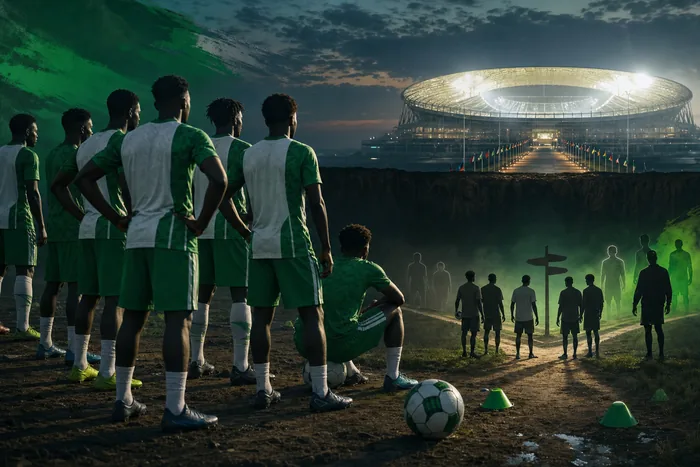
Nigeria’s failure to qualify for the 2026 FIFA World Cup has left the Super Eagles facing a hard reset: elite players such as Victor Osimhen, Ademola Lookman and William Troost-Ekong miss a global showcase, coach Eric Chelle is under pressure to rebuild trust, and the NFF must compete harder for foreign-raised Nigerian talent watching other countries offer World Cup football.
Key Takeaways
- Nigeria’s 2026 World Cup dream ended after a playoff defeat to DR Congo on penalties in November 2025.
- The absence hurts key Super Eagles stars by removing the biggest international platform of the cycle, especially for players at peak club and market relevance.
- Eric Chelle has apologised for recent failures and is using June friendlies and new call-ups as part of a rebuild.
- William Troost-Ekong has been one of the notable senior voices reflecting on the qualification failure, while no fresh June 10 kickoff reaction from Osimhen or Lookman was available in the supplied reporting.
- Nigeria’s talent-pull problem is sharper because several players of Nigerian heritage are expected to be at the World Cup with other national teams.
Who They Are
The Super Eagles remain one of Africa’s most watched football brands, but their absence from the 2026 FIFA World Cup has turned attention from tournament expectations to accountability, squad renewal and the battle to keep elite Nigerian-eligible players committed.
Nigeria’s flagship men’s football team, representing the country in CAF and FIFA competitions.
Nigeria are now in rebuild mode, using post-qualification friendlies and new call-ups to reset after missing the World Cup.
Why They Are In Focus Now
The 2026 FIFA World Cup opens on Thursday, June 11, at Mexico City Stadium, but Nigeria will not be part of the expanded tournament. That makes the Super Eagles’ absence feel even louder. The team’s campaign ended in November 2025 after a playoff final against DR Congo finished 1-1 after extra time before Nigeria lost 4-3 on penalties. Victor Osimhen’s injury in that match added to the sense of a night when both the team’s present and its immediate future took a hit. Since then, the conversation has moved from match pain to structural questions: why Nigeria failed, how quickly the squad can recover, and whether the national team can still sell itself convincingly to the next generation of dual-national talent.
Their Role In The Moment
Nigeria’s role at this World Cup is an uncomfortable one: a giant watching from outside while others take the global spotlight. For key players, the impact is direct. Osimhen, one of Africa’s most recognisable forwards, loses the chance to lead Nigeria on the world’s biggest football stage. Ademola Lookman, another major attacking figure, also misses a tournament that could have strengthened his international profile. William Troost-Ekong’s situation carries a different weight: as a senior leader, he has become one of the players asked to explain what went wrong and what should come next. Recent reporting has highlighted his reflections on Nigeria’s early qualifying problems, the pressure around the team and optimism about younger players. On the administrative side, NFF president Ibrahim Gusau has acknowledged disappointment and spoken about restoring confidence, while National Sports Commission chairman Shehu Dikko has framed Nigeria’s 2026 World Cup chapter as competitively closed, even with earlier legal discussions around the DR Congo fallout.
Why They Matter Right Now
This is bigger than one missed tournament. Nigeria’s football identity has long been built on World Cup moments, star forwards, diaspora pride and the feeling that the Super Eagles should belong in the global conversation. Missing 2026 weakens that pull at a delicate time. Many top Nigerian-eligible players are foreign-raised, often born or developed in Europe, North America or elsewhere, and their international decisions can be shaped by opportunity, stability and major-tournament access. If a teenager with Nigerian parents sees players of Nigerian heritage competing at the World Cup for other nations while Nigeria sits out, the emotional pull of the green shirt has to be matched by a credible sporting project. That is why the rebuild under Eric Chelle is not just about friendlies. It is about restoring a sense that choosing Nigeria means choosing ambition, organisation and a clear pathway.
Football Context
Nigeria’s absence from the 2026 World Cup has created immediate football consequences for senior stars, the coaching staff and the next recruitment cycle.
Football Context
- Nigeria were eliminated from World Cup qualification after losing to DR Congo on penalties in the CAF playoff final in November 2025.
- Victor Osimhen was injured during that playoff defeat, according to match reporting, underlining how the campaign ended with both competitive and personnel setbacks.
- Eric Chelle has publicly apologised for Nigeria’s recent AFCON and World Cup failures and has pointed toward improvement through new call-ups and squad rebuilding.
- PUNCH reported Chelle lamented the absences of Osimhen and Lookman ahead of June friendlies, with Nigeria preparing for matches while World Cup-bound nations fine-tune for the tournament.
- Portugal’s friendly against Nigeria places the contrast in sharp focus: Portugal are using the game as a World Cup warm-up, while Nigeria are using the same window to rebuild.
- Reports on Nigerian-heritage players at the World Cup vary in count, but the wider point remains clear: Nigeria will watch several eligible or heritage-linked players appear on the stage the Super Eagles missed.
How They Became Prominent
The Super Eagles’ prominence comes from decades of talent, visibility and expectation: World Cup appearances, elite exports to Europe, AFCON pedigree and a fan base that stretches from Lagos to London, Houston, Johannesburg and beyond. That history is why missing 2026 stings. Nigeria are not treated like a developing football nation that can quietly absorb failure. They are judged like a continental heavyweight. The current squad still has global-quality names, but modern international football demands more than individual brilliance. It demands coherent planning, reliable player management, fast integration of dual-national options and a stable message from coaches and administrators. That is the gap Nigeria must now close.
What Comes Next
The next phase is about credibility. Chelle’s squad selections, the response of senior stars, the handling of Osimhen and Lookman’s reintegration, and the NFF’s ability to present a serious pathway to young Nigerian-eligible players will all matter. Nigeria cannot change the 2026 World Cup absence now, but they can shape how damaging it becomes. If the rebuild looks serious, the miss can become a reset. If it looks confused, the cost could stretch into AFCON cycles, future World Cup qualifying and the battle for diaspora talent.
Watchlist
- How Eric Chelle uses June friendlies and new call-ups to refresh the Super Eagles.
- Whether Osimhen, Lookman and other core players return smoothly to the national-team project after the June window.
- How senior figures such as Troost-Ekong frame the rebuild and whether younger players are given real responsibility.
- Whether the NFF improves communication, welfare and planning enough to restore player and fan confidence.
- How Nigeria responds to the visibility of Nigerian-heritage players representing other countries at the 2026 World Cup.
Sources
- World Cup 2026 | Mexico City Stadium hosts opening match - FIFA, 2025/2026 tournament information
- Nigeria 1-1 DR Congo (3-4 on penalties, aet): Osimhen injured as World Cup dream fades away - beIN SPORTS, November 16, 2025
- Nigeria vs. DR Congo score: World Cup qualifying result, stats as Super Eagles fall on penalties in CAF playoff final - Sporting News, November 2025
- Chelle apologises for AFCON, World Cup failures - PUNCH, June 2, 2026
- Chelle explains new Eagles call-ups - PUNCH, June 6, 2026
- Chelle laments Osimhen, Lookman absences ahead friendlies - PUNCH, June 1, 2026
- 2026 FIFA World Cup: Why Ekong's excuse for Super Eagles absence is valid - Afrik-Foot, June 9, 2026
- William Troost-Ekong Reacts to Nigeria Missing the 2026 FIFA World Cup, Video - Legit.ng, March 22, 2026
- Nigeria’s 2026 World Cup chapter closed – Dikko - BusinessDay, February 21, 2026
- NFF President Breaks Silence Over Super Eagles’ Bonus Row, World Cup Qualification Failure - Legit.ng, December 13, 2025
- FULL LIST: 16 players with Nigerian heritage at 2026 World Cup - PUNCH, June 9, 2026
- Ronaldo leads Portugal squad for friendly against Nigeria - PUNCH, June 9, 2026
More in Nigeria Sports Stars
-
Nigeria Outside The 2026 World Cup: What The Super Eagles’ Absence Means For Stars, Rebuild And Diaspora TalentJune 10
-
Nigeria Outside The 2026 World Cup: What The Super Eagles’ Absence Means For Stars, Rebuild And Diaspora TalentJune 10
-
Victor Osimhen Is Back In Transfer Focus � But Galatasaray Still Hold The Strong HandJune 3
More Summaries
- Nigeria Ethnic Origins Source-backed Visual Stories explaining Nigerian ethnic groups, origins, migration accounts,...
- Nigeria Festivals A recurring monthly review/tracker of top festivals and cultural events in Nigeria
- Geopolitical Conflict Deep Dive Source-backed deep dives into major geopolitical conflict developments, explaining what happened,...
- News Summaries Nigeria News Summaries is your go-to digest for the latest headlines from Nigeria and beyond. We...